How to Make an Online Course: What Nobody Tells You Before You Start
There's no shortage of advice on how to make an online course.
Record your screen. Use a good microphone. Organize your content into modules. Upload it to a platform. Write a sales page. Launch it.
That advice is accurate. It's also missing the most important parts of the process, the parts that determine whether the course you spend weeks building generates real revenue or sits on a platform collecting digital dust while you wonder what went wrong.
This article isn't going to tell you how to screen record or which microphone to buy. It's going to cover what nobody tells you before you start: the decisions that happen before you record a single video that determine almost everything about whether the finished course actually sells.
The Question That Changes Everything
Before you write an outline, before you choose a platform, before you think about modules or lessons or workbooks, there's one question worth sitting with until you have a real answer.
Will a stranger who has never heard of you pay money for this?
Not will they find it interesting. Not will they tell you they'd love to see this someday. Not will your existing audience respond enthusiastically when you ask if they'd want it.
Will a cold prospect who found you through a paid ad or an organic search, someone with no prior relationship with you and no reason to be charitable, open their wallet for this specific solution to this specific problem at this specific price point?
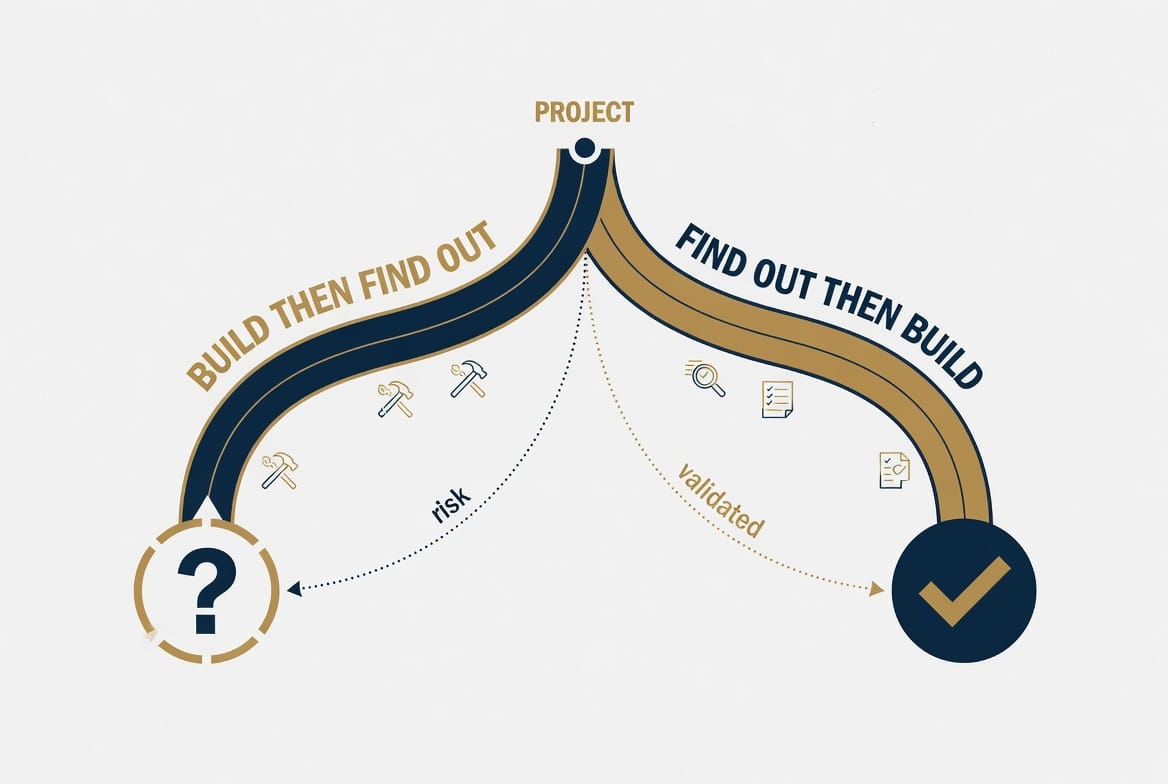
Most course creators never find out the answer to this question before they build the course. They build first, launch second, and discover the answer in the sales numbers after months of work are already committed.
The ones who build courses that sell find out the answer before they build.
They do this through a validation test. A simple, low-ticket product that addresses one specific problem in their space, put on a minimal page and driven with a small amount of paid traffic for five days. The conversion rate on that page tells them, with real behavioral data from real strangers, whether the demand they assume exists is actually there.
If it is, they build the course knowing they're solving a problem people will pay to solve.
If it isn't, they've learned something valuable for a few hundred dollars instead of discovering it after months of work.
What Your Course Actually Needs to Do
An online course has one job.
Move a specific person from a specific problem to a specific outcome.
Everything about the course, the structure, the length, the format, the content, should be evaluated against that one job. If a module doesn't contribute to moving the buyer from the problem to the outcome, it doesn't belong in the course regardless of how interesting or relevant it is to the broader topic.
This is where most course creators struggle. They know a lot about their subject. They've spent years developing expertise. The temptation to share that expertise comprehensively is real and understandable.
But comprehensive isn't what sells. Transformation sells.
The buyer who lands on your course page is not thinking about how much they'll learn. They're thinking about one specific thing they want to be different after going through your course. They want to be on the other side of a specific problem. They're paying for the outcome, not for the volume of content.
Before you outline a single module, write down in one or two sentences exactly what the buyer's situation looks like at the start of the course and exactly what it looks like at the end. Then build the course that produces that specific transformation as directly as possible.
Every lesson that moves the buyer from point A to point B earns its place. Everything else is padding that dilutes the course and reduces completion rates without adding to the transformation.
The Format Question
Most people approach course creation assuming video is required. It isn't.
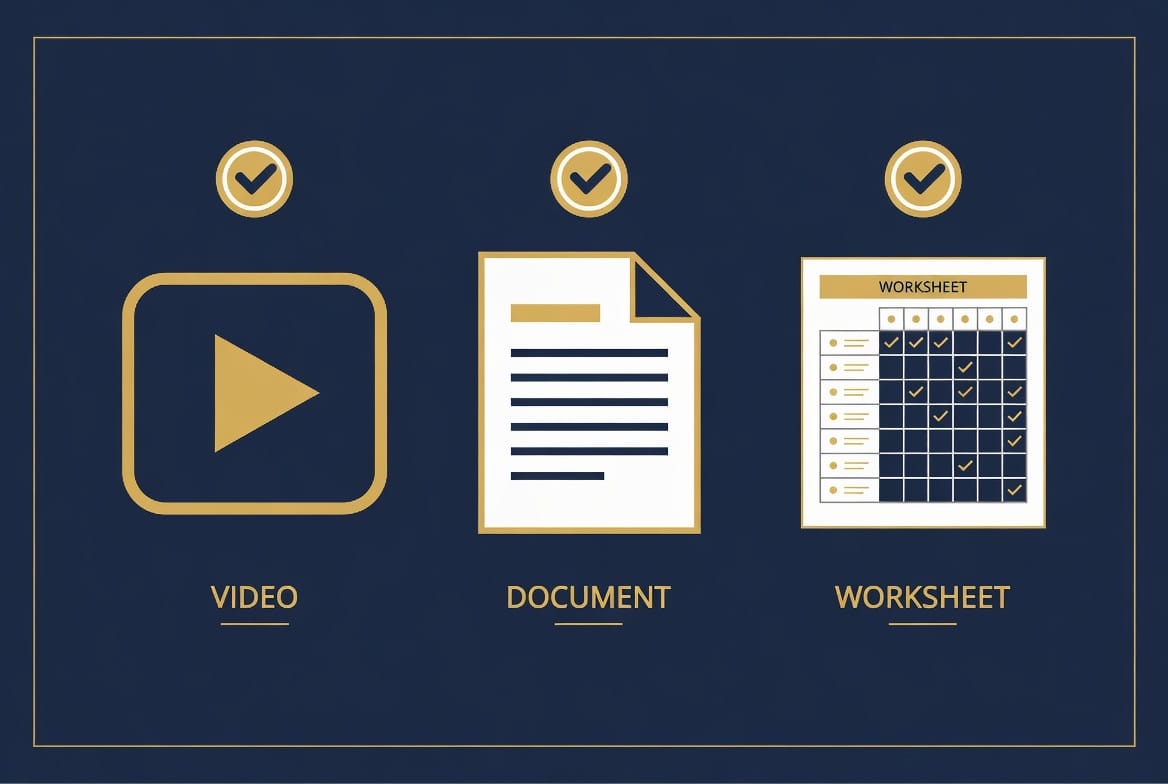
Video is often the right format. It's also genuinely useful in specific cases: when demonstrating something visual, when your personal presence adds credibility or connection to the material, when seeing someone walk through a process is meaningfully clearer than reading about it.
But some of the highest-converting, highest-satisfaction courses are built primarily on written content with a few short video explanations for the parts that genuinely benefit from being shown.
The format question worth asking for each piece of content is: what's the fastest, clearest way to move the buyer from not understanding this to understanding it and being able to apply it?
Sometimes that's a five-minute video. Sometimes it's a one-page written explanation. Sometimes it's a template or a worksheet that lets them implement immediately without needing to absorb more instruction first.
The creators who overthink format spend weeks on production before anyone has confirmed they want the content. The ones who get courses into the market fastest pick the simplest format that communicates clearly and iterate from there.
The One Production Element That Actually Matters
If you search for advice on making an online course, you'll find strong opinions about cameras, lighting setups, editing software, animated intro sequences, and professional studio environments.
Most of this is noise.
There's one production element that consistently affects whether buyers complete courses and whether they request refunds.
Audio quality.
Bad audio is the single most common reason people abandon courses they paid for. Not because they're particularly sensitive to technical quality in the abstract. Because inaudible dialogue, distracting background noise, or audio that requires effort to understand creates a constant low-level friction that accumulates over time until the buyer stops watching.
You don't need a professional microphone. You need a microphone that isn't the built-in laptop or phone mic. A decent USB microphone in the $50 to $100 range produces audio that is dramatically cleaner than built-in options. Recording in a small, soft-furnished room rather than a large, hard-surfaced one reduces echo without any additional equipment.
Get the audio right. Everything else, camera quality, lighting, slide design, editing sophistication, affects perception at the margin. Audio affects whether people finish the course and whether they feel they got their money's worth.
The Outline Is Not the Course
One of the most common points where course creation stalls is the transition from outline to recording.
The outline feels like progress. It's clean. It's organized. It represents the full shape of the course in a way that's easy to evaluate and adjust.
Then you sit down to record and realize that an outline is not a script, a lesson is not a bullet point, and translating a list of topics into actual content that moves someone from confusion to clarity requires a different kind of work than organizing information into sections.
A few things that help this transition.
Record the simplest possible version of each lesson first. Don't try to be comprehensive or polished in the first pass. Get the core idea onto video, move to the next lesson, and complete a rough version of the full course before going back to refine anything. A complete rough course can be delivered to beta buyers and refined based on their feedback. A polished half-course can't be delivered to anyone.
Teach the way you would explain it to a smart friend who knows nothing about the topic. Not the way you'd present to peers or write for a textbook. The most useful thing a course can do is take something that feels complicated and make it feel manageable. Jargon and formality usually work against this.
Start each lesson by telling the buyer what they're going to know or be able to do by the end. This frames the content before it starts and gives the buyer a clear sense of whether the lesson is relevant to their specific situation. It also helps you stay focused on the point of the lesson rather than wandering into adjacent territory.
Beta Buyers Are More Valuable Than a Polished Launch
Most course creators want the course to be complete and polished before anyone sees it. This is understandable and it costs them real money and real time.
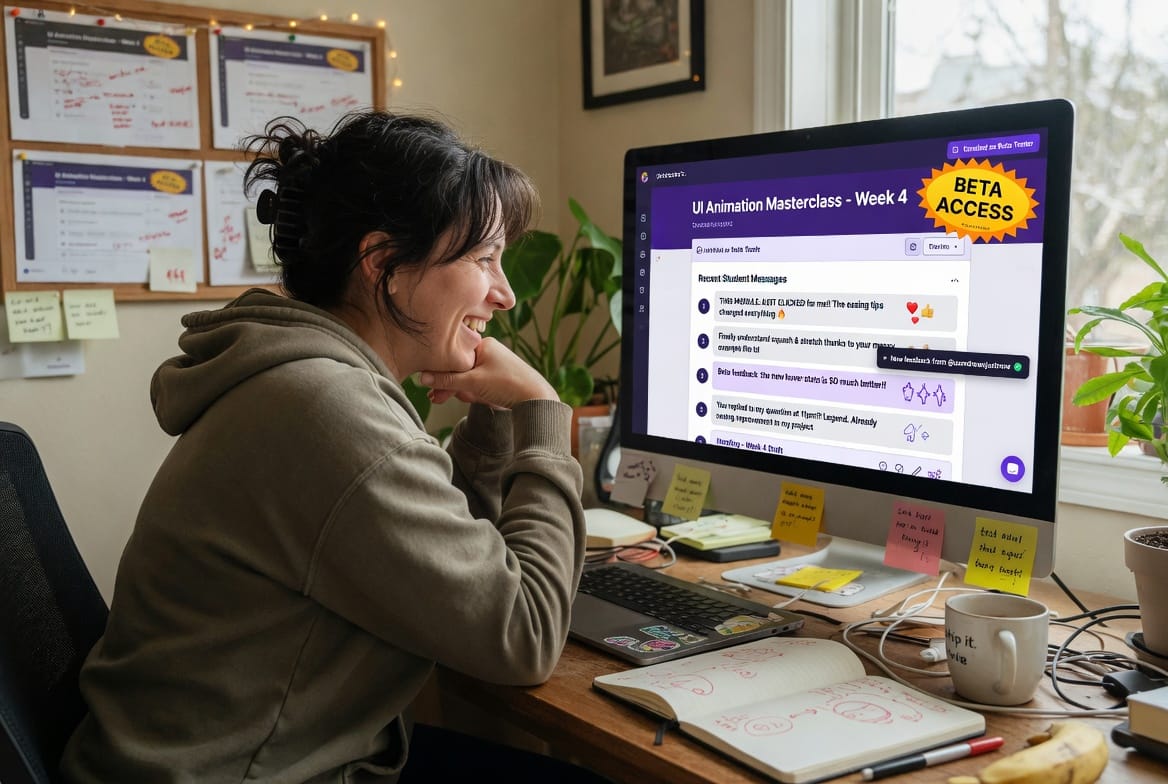
A better approach is to sell the course before it's finished to a small group of buyers at a discounted price in exchange for their feedback as the content is delivered.
This does several things simultaneously.
It confirms real purchase intent before significant production time is committed. It generates revenue that funds the rest of the production. It gives you direct feedback from actual buyers about what's working, what's confusing, and what's missing, feedback you'd otherwise only get after launch when it's too late to incorporate it.
Beta buyers who got real results from a course in progress become the testimonials that make the public launch more credible. Their specific, detailed accounts of what changed for them are worth more in a sales context than any amount of polished production.
The willingness to sell something before it's perfect is one of the clearest dividing lines between course creators who generate revenue and ones who perpetually refine their course in private while waiting for it to be ready enough.
It's ready enough when someone paid for it and got a result. That standard is usually reachable much earlier than the creator thinks.
Where the Course Fits in the Bigger Picture
Making a course is the middle of the story, not the beginning.
The beginning is confirming that real people will pay for a solution to a specific problem. The middle is building the course that delivers that solution. The end is the system that gets the right buyers to the course at the right moment with the right relationship already established.
Most course creators focus almost entirely on the middle. They spend months on production and almost no time thinking about the front end that delivers buyers to the course or the back end that serves buyers who want to go further.
The result is a course that exists in isolation. It might be excellent. It has no system feeding it buyers who are already warm, already trusting, and already predisposed to say yes to the bigger offer when the course delivers on its promise.
Imagine knowing that every buyer who completes your course and gets a result naturally moves toward a deeper engagement with your work. Not because you pushed them there but because the course delivered what it promised and they want more of what's on the other side.
That's what a connected system produces. The course is one piece. The front-end product that validates demand and builds buyers. The post-purchase sequence that bridges buyers from the course to the back-end offer. The back-end offer itself.
Each piece makes the others more effective. The course that's embedded in that system performs completely differently from the same course sitting alone on a platform with no connected front end and no back-end path for buyers to follow.
How to build that complete system, from the validation product through the course and into the back end, is exactly what Get Paid to Get Leads covers.