What Is a Micro Offer Funnel for Coaches? Strategy, Example and Why It Works
If you've been coaching for any length of time, you've probably tried at least one of the standard approaches to getting clients.
Free discovery calls. A free lead magnet leading to a nurture sequence. Organic content driving DMs. Maybe a webinar. Maybe a launch.
All of these approaches have something in common: they either require a lot of your time to sustain them or they ask cold strangers to make a large financial commitment before they've had a single positive transaction with you.
A micro offer funnel solves both of those problems in a structure that's been quietly responsible for a lot of the most consistent revenue in the online coaching space.
This article is going to explain exactly what a micro offer funnel is, walk through a real example of how it works, and explain why this specific model consistently outperforms the alternatives for coaches trying to build a business that generates clients without requiring a live performance every week.
What a Micro Offer Funnel Is
A micro offer funnel is a sequence of connected offers designed to acquire buyers at a low price point and move them toward higher-ticket coaching through a series of structured steps.
It has four components that work together.
The first is the micro offer itself. A low-ticket product priced between $7 and $47 that solves one specific, immediate problem your ideal coaching client is already trying to solve. This is the entry point. It's not a preview of your coaching program. It's a standalone product that delivers a complete solution to one narrow problem.
The second is the value stack. An order bump on the checkout page and an upsell immediately after purchase. These two elements raise the average transaction value without raising the price of the micro offer and without requiring additional traffic.
The third is the Bridge System. A thank you page that delivers the product and introduces the coaching offer as the natural next step, followed by a five to seven day email sequence that delivers value, builds the relationship, and invites buyers to consider the coaching program.
The fourth is the back-end coaching offer. The discovery call, the group program, the one-on-one package. This is where the real revenue lives. The micro offer funnel is the system that delivers pre-qualified buyers to this offer continuously.
A Real Example From Start to Finish
Let's walk through what this looks like for a specific coach.
Jennifer Walsh is a business coach who helps side-hustle entrepreneurs transition out of their corporate jobs. Her high-ticket offer is a $2,000 six-month coaching program.
Her micro offer funnel looks like this.
Her front-end product is a $27 guide called "The 90-Day Money Map: How to Know Exactly When You Can Quit Your Job Without the Financial Risk." It solves one specific problem her ideal client is already obsessing over: the financial calculation of when it's safe to leave.
On the checkout page, she has an order bump: a $17 spreadsheet calculator that does the math automatically, the same calculation the guide teaches but pre-built so the buyer doesn't have to create it from scratch. It converts at 33 percent.
Immediately after purchase, before reaching the thank you page, buyers see an upsell: a $47 video training called "The First 90 Days After You Quit: How to Replace Your Salary Before You Lose Your Safety Net." It converts at 19 percent.
Her average order value: $27 plus $5.61 from the order bump plus $8.93 from the upsell equals $41.54.
She runs Meta ads to the $27 guide. Her cost per acquisition is $34. Her front end generates $7.54 per buyer before her coaching program ever enters the picture.
Her thank you page delivers the guide and introduces the coaching program with a short video. Her five-day email sequence delivers two pieces of genuinely useful content from the guide, tells the story of a client who made the transition successfully, and invites buyers to book a discovery call if they're ready to do this with direct support.
Of every 100 buyers who come through the funnel, 7 book discovery calls. She closes 3 of those into her $2,000 program.
That's $6,000 in coaching revenue from 100 buyers who cost her roughly $3,400 in ad spend. Plus $4,154 in front-end funnel revenue. Total revenue: $10,154. Total ad spend: $3,400. Net before her own time: $6,754.
And the buyer list keeps growing every day the funnel runs.
Why This Works When Other Models Don't
The micro offer funnel works for coaches in a way that other lead generation models don't for three specific reasons.
It pre-qualifies leads through a financial commitment.
When someone buys a $27 product, they've done something that no free lead magnet download can replicate. They've demonstrated that they spend money on solutions to their problems. That single behavioral signal predicts everything about how they behave on the back end.
Discovery calls with buyers who came through the micro offer funnel are fundamentally different from discovery calls with people who downloaded a free guide or attended a free webinar. Buyers arrive already trusting you. They've already gotten value from you. The call is about fit, not credibility.
Jennifer's close rate on discovery calls from her funnel buyers is 43 percent. Her close rate on discovery calls from cold webinar attendees, before she built the funnel, was 18 percent. Same offer. Same coach. Different quality of prospect walking through the door.
It generates revenue that covers the cost of growing the list.
The entire promise of organic content as a lead generation strategy is that it's free. The reality is that it costs an enormous amount of time, consistency, and energy, resources that are genuinely scarce for a coach who is also delivering to existing clients.
The micro offer funnel replaces that cost with a financial cost that the funnel itself covers. The front-end revenue covers the ad spend. The list grows automatically. The time Jennifer was previously spending creating content to attract free leads is now available for client delivery, product improvement, or simply living her life.
It creates a consistent, predictable pipeline.
The pipeline that comes from organic content and cold outreach is unpredictable. Good months and bad months. Feast and famine. Revenue that's impossible to plan around.
The pipeline that comes from a properly structured micro offer funnel is predictable. Every day the funnel runs, a known number of buyers come in. A known percentage book calls. A known percentage of those calls close. The revenue is not perfectly consistent, but it's consistent enough to plan around and build on.
The Micro Offer Itself: What Makes It Work
The most common mistake coaches make when building a micro offer funnel is building the wrong micro offer.
The micro offer is not a cheap version of your coaching program. It's not a module pulled from your existing course. It's not a general introduction to your methodology.
It's a complete solution to one specific, immediate problem.
The word specific is doing a lot of work there. The more specifically the micro offer names the exact problem it solves, the better it performs at every stage. Better click-through rates on the ad. Better conversion rates on the landing page. Higher satisfaction from buyers. More credible transitions into the coaching program because the buyer can see the direct connection between what the micro offer solved and what the coaching program does at a deeper level.
A micro offer called "The Coaching Business Guide" tells the prospect almost nothing about whether this product is for them.
A micro offer called "How to Get Your First Three Paying Coaching Clients This Month Without a Website, a Large Following, or Paid Ads" tells the right prospect immediately and precisely whether this is what they need.
The specificity also makes the connection to your coaching program more natural. Someone who bought the guide on getting their first three clients is an obvious prospect for a coaching program about building a sustainable, scalable coaching business. The micro offer created the problem that the coaching program solves.
The Bridge That Connects the Micro Offer to the Coaching Program
The gap between a $27 product and a $2,000 coaching program is not crossed automatically.
The Bridge System is what closes it.
The thank you page is the first touchpoint. The moment a buyer completes their purchase is the highest point of their buying momentum. They just made a decision. Their resistance is at its lowest. This is the moment to introduce the coaching program, not as a hard pitch, but as the natural next step for someone who wants more than what the $27 guide can take them.
A two to three minute face-to-camera video on the thank you page explaining what the coaching program is, who it's right for, and how to find out if it's a fit, converts a meaningful percentage of buyers immediately. Jennifer's thank you page converts 4 percent of buyers into discovery calls without any further follow-up.
The email sequence over the following five days does three things in order. It delivers additional value from the micro offer that gets buyers implementing and experiencing early results. It builds the relationship so the buyer feels like they know Jennifer as a person, not just as a product seller. And it introduces the coaching program again as the obvious next step for someone who has experienced what Jennifer's approach can do and wants the full version.
The sequence doesn't pressure. It presents. The buyers who are ready will book. The ones who aren't yet will stay on the list until they are.
What This Means for Your Coaching Business
A micro offer funnel doesn't replace coaching. It makes coaching more accessible and more sustainable.
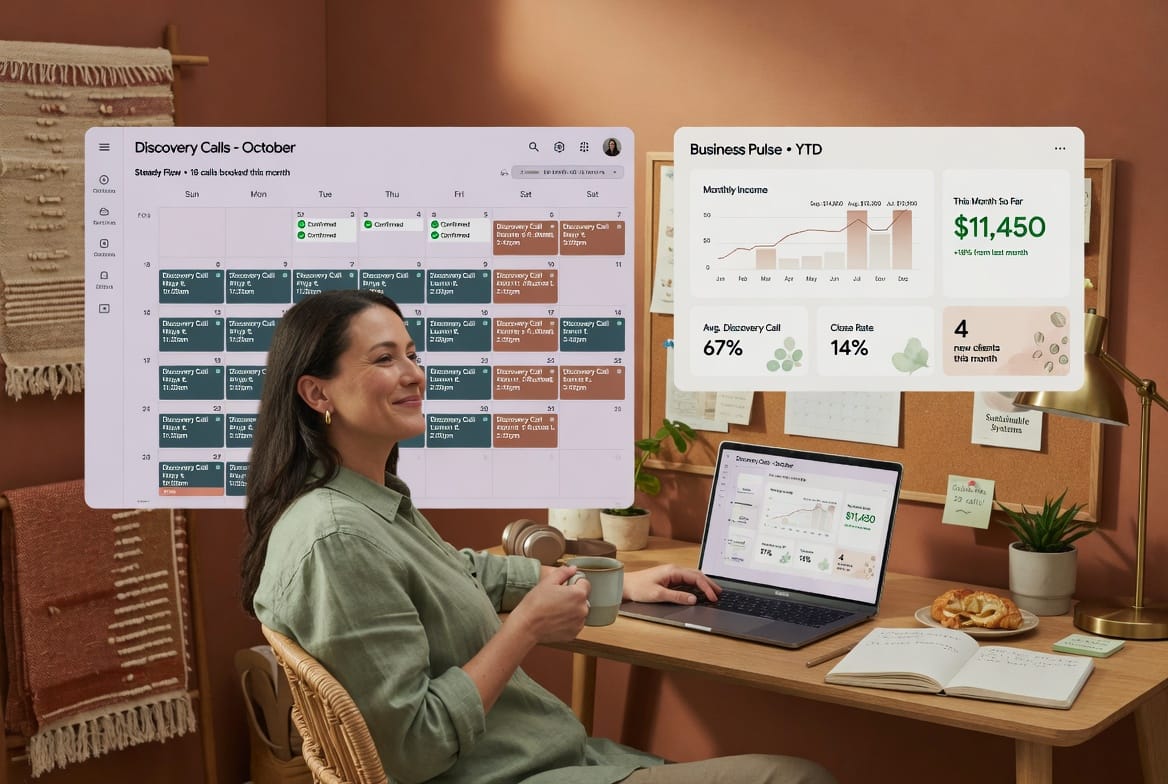
Imagine waking up each morning knowing that a handful of new buyers came in overnight. That your discovery call calendar is filling with people who already paid you, already got value from you, and already decided they trust you before they ever got on the phone.
Imagine your high-ticket coaching program being consistently full, not from exhausting launch cycles or daily outreach, but from a pipeline that runs automatically while you're delivering to existing clients.
That's what a properly built micro offer funnel produces for coaches who implement it correctly.
The complete system for building it, from the micro offer through the value stack, the Bridge System, the ad setup, and the daily management process, is exactly what Get Paid to Get Leads covers.