Why 1,000 Buyers on Your List Beats 20,000 Free Subscribers Every Time
Open rates. Subscriber counts. List size.
These are the numbers most coaches and course creators track religiously. They're the metrics that look impressive in a screenshot and mean almost nothing in your bank account.
Here's what actually happens when you build a list the traditional way.
You create a free lead magnet. A guide, a checklist, a mini-course. You promote it. People sign up. The number goes up. Progress feels like it's happening.
Then you send an offer. And the sales don't come close to matching the size of your list.
So you create more content. Grow the list more. Try a new email sequence. Maybe a launch. And the same pattern repeats.
This is one of the most common and frustrating cycles in online business. And the reason it keeps happening has almost nothing to do with your offer, your niche, or your copy.
It has everything to do with who is actually on your list.
The Problem With Building a List Around Free
Consider Sarah Mitchell.
Sarah is a life and mindset coach who left her corporate HR job in 2021. She spent three years building her email list the traditional way: free guides, free challenges, free video trainings. By early 2024, she had just over 19,000 subscribers. Her open rates were decent. Her content was genuinely good. She was helping people.
Her revenue? Around $4,200 a month. Inconsistent. Never predictable.
She was spending roughly $200 a month just to keep those 19,000 people on her email platform. Add in the hours spent writing content to keep them engaged, and the real cost was much higher.
By every traditional marketing benchmark, her list looked healthy.
But 19,000 people were generating less than $5,000 a month. That works out to about 26 cents per subscriber, per month.
The math didn't add up. And Sarah couldn't figure out why.
Here's what was actually happening.
What a Free Opt-In Actually Tells You
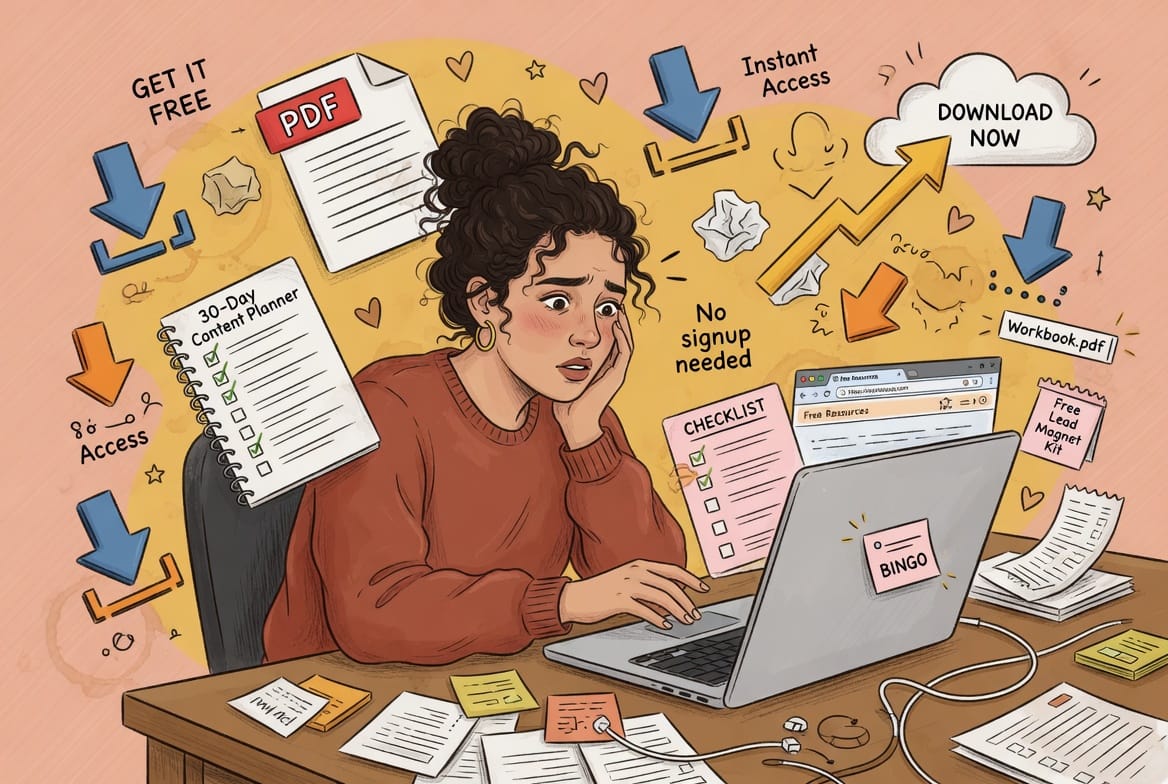
When someone downloads your free lead magnet, they give you exactly one piece of information about themselves.
They like free things.
That's it. Nothing else.
You don't know if they'll ever spend money. You don't know if they value what you do. You don't know if they're someone who acts on information or someone who collects it and moves on.
Most of them are collectors.
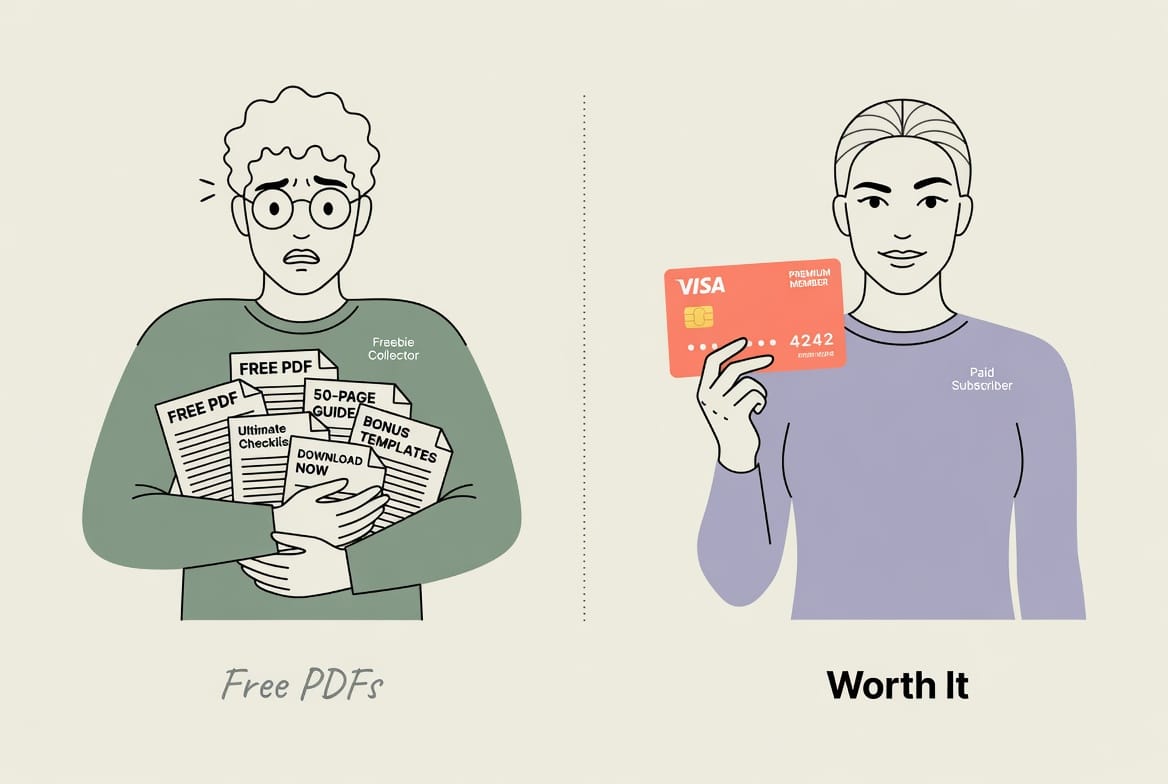
They're on a dozen other lists. They grabbed your freebie the same way they grabbed the last seven freebies from the last seven coaches they followed. They open emails occasionally. They click when something looks interesting. And they buy almost never.
Meanwhile, you're paying to keep every single one of them on your list every single month.
The selection problem started before they ever gave you their email address. The free opt-in filtered for the wrong person from day one.
What Happens the Moment Someone Pays You
Now here's where things change.
When someone pays you, even $7, $17, or $27, something completely different happens.
They've made a buying decision. They've crossed from consumer to customer. And that single act changes everything about how they behave for the rest of their time on your list.
Buyers open your emails more. They click more. They respond to your questions. They engage with your content differently. And most importantly, they buy again.
This isn't just a theory. It's basic buyer psychology. The act of making a purchase creates what researchers call cognitive consistency. People who have bought something want to keep being the kind of person who invests in solving their problems. It reinforces their identity as someone who takes action.
A freebie collector has a completely different identity. They're optimizing for getting information without spending money. No matter how good your emails are, you're working against that identity every single time you ask them to buy something.
The Numbers Side by Side
Most people understand this conceptually. But seeing the actual math is what makes it click.
Let's look at two lists.
List A: 20,000 free subscribers
Typical purchase rates for a free list in the coaching and course creator space run about 1 to 2 percent. Call it 1.5 percent. In a normal month with regular email marketing, you're realistically seeing 0.3 to 0.5 percent take action on any given offer. That's 60 to 100 sales at a $97 price point. Monthly revenue: roughly $5,800 to $9,700, before you account for refunds and platform fees.
List B: 1,000 buyers
These are people who already paid to get onto your list. Purchase rates for buyer lists on follow-up offers run 5 to 15 percent, depending on how well the front-end product delivered. At a conservative 7 percent on a $97 offer, that's 70 sales. Monthly revenue: $6,790.
List B is 95 percent smaller and generating the same or more revenue.
Now scale List B to 5,000 buyers. Same 7 percent rate. 350 sales at $97. Monthly revenue: $33,950.
That's what Sarah was missing. She had been optimizing for the number that felt like progress, not the number that actually predicted income.
Why the Buyer List Compounds While the Free List Drains
Here's what most people don't account for.
A free list gets more expensive over time.
Your email platform charges more as your subscriber count grows. Deliverability gets harder as inactive accounts pile up. You have to work harder just to maintain the same open rates. The returns keep shrinking as a percentage of the list.
A buyer list does the opposite. It compounds.
Every buyer you add is worth 10 to 100 times more over their lifetime than a free subscriber. They're more likely to buy your next offer. More likely to upgrade to a higher-ticket program. More likely to refer someone else who also buys.
When Sarah shifted from free lead magnets to a low-ticket front-end product, here's what her first 90 days looked like.
She created a $27 product that solved one specific, immediate problem her ideal clients were already looking for answers to. She ran a modest paid traffic test, around $30 a day on Meta. Her order bump converted at 28 percent. Her upsell converted at 19 percent.
In 90 days, she added 412 buyers to her list. Her front-end funnel was nearly breaking even on ad spend. And three of those 412 buyers had joined her $350 a month coaching program.
That's $1,050 a month in recurring revenue from a list of 412 people.
Compare that to what 412 free subscribers would have generated in the same period. If she was lucky, maybe one or two sales. More likely, nothing.
The difference wasn't the size of the audience. It was who was in it.
The Metric That Actually Predicts Your Revenue
If you take one thing from this article, make it this.
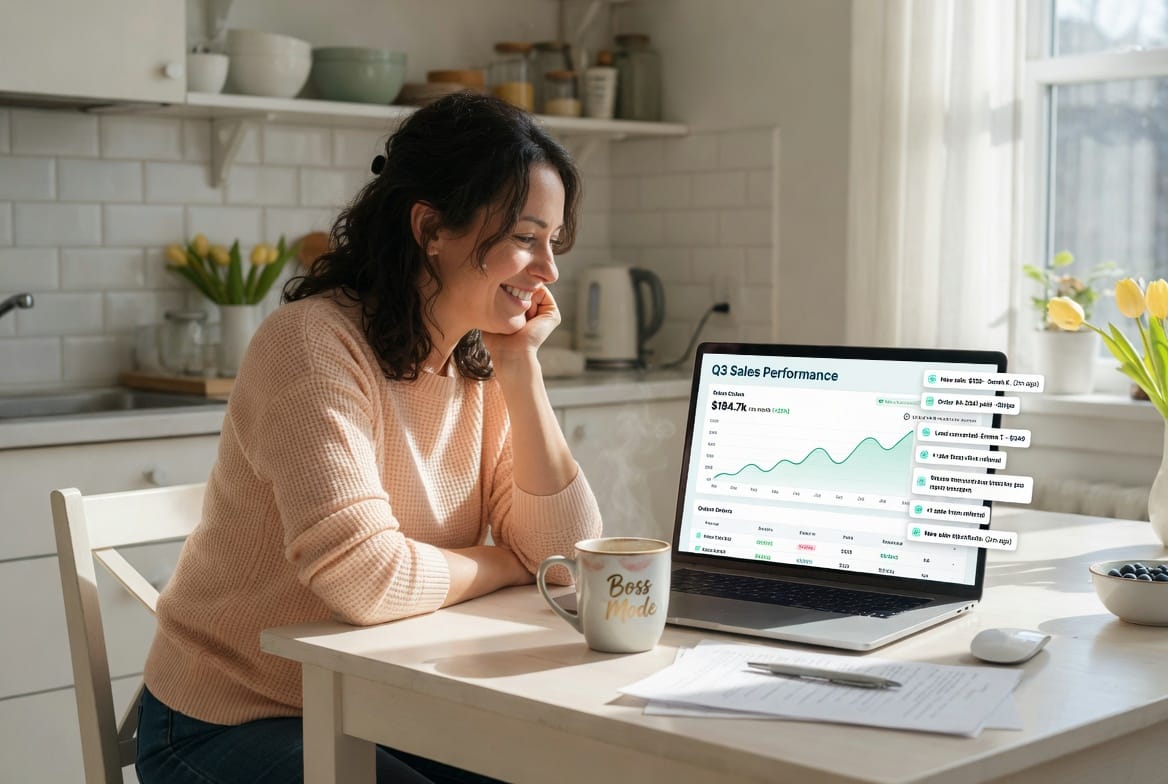
Stop measuring your list by how many people are on it. Start measuring it by revenue per subscriber.
A healthy, well-monetized list in the coaching space produces $1 to $3 per subscriber per month. If you're running below that, your list has a composition problem, not a size problem.
Here's how to calculate yours right now:
Take your email list revenue from the last 30 days
Divide it by your total subscriber count
That's your revenue per subscriber
If that number is below $1, adding more free subscribers won't fix it. It just makes the problem larger and more expensive to maintain.
What fixes it is changing who gets onto the list in the first place.
What a Low-Ticket Front-End Actually Does to Your List
A $7 to $47 product does something a free lead magnet can never do.
It filters.
The people who pay, even a small amount, are self-selecting as buyers. They've already proven they'll spend money on a solution. Every one of them who lands on your list has crossed the line that the freebie collectors never will.
And it does something else.
It starts to pay for the cost of getting them there.
When your front-end product generates revenue, the cost of adding a new buyer drops. When the cost drops enough, you can run paid traffic profitably. When you can run paid traffic profitably, your list builds automatically, around the clock, without you manually creating content every day to drive organic sign-ups.
That's the shift from a list-building strategy to a buyer-building machine.
Sarah's 19,000 free subscribers were costing her money every month to maintain. Her 412 buyers, added over 90 days with a small ad spend, were generating more revenue per person and growing a back-end that was just getting started.
The choice between those two models isn't really a close call once you see the math.