Why Your Coaching Offer Is Not Selling: 7 Reasons and How to Fix Them
Your offer isn't selling.
You've put real work into it. The content is solid. The transformation is real. You've talked to enough potential clients to know this is something people genuinely need.
And it's still not selling the way it should.
Before you change the price, restructure the program, or pivot to a completely different niche, it's worth diagnosing what's actually wrong. Most offers that aren't selling have one or two specific, fixable problems. Identifying the right problem saves months of effort that would otherwise go into changing the wrong thing.
Here are the seven most common reasons a coaching offer isn't selling and what to do about each one.
Reason 1: The Wrong People Are Seeing It
The most common reason an offer doesn't sell isn't the offer. It's the audience.
An excellent offer presented to the wrong audience produces no sales. A mediocre offer presented to the exact right audience at the right moment produces a lot.
The diagnostic question is: who is actually seeing your offer right now? Not who you intend to see it. Who is actually landing on your page, opening your emails, watching your content?
If you've been building a free email list through a lead magnet that attracted people interested in the general topic rather than people experiencing the specific problem you solve, your audience may be misaligned with your offer. They're interested but not urgent. They like the free content but have no burning reason to pay for help right now.
The fix is either to change who you're attracting or to change the offer to better match who you've actually attracted.
The more permanent fix is to build an audience of buyers rather than free subscribers, people who have already demonstrated they spend money on solutions to their problems. A buyer list of 500 people produces more sales than a free subscriber list of 5,000 for most coaching offers.
Reason 2: The Offer Is Too Vague
Vague offers don't sell to cold or warm traffic.
A coaching offer that describes what you do without clearly naming who it's for, what specific problem it solves, and what the specific outcome is on the other end of the engagement is asking the prospect to do too much work to figure out whether it's relevant to them.
Most prospects don't do that work. They move on.
The diagnostic question is: can someone read your offer description and immediately know whether it's for them, what specific problem it addresses, and what their life or business looks like after working with you?
If the answer requires any interpretation or if the answer is "it depends on the person," the offer is too vague.
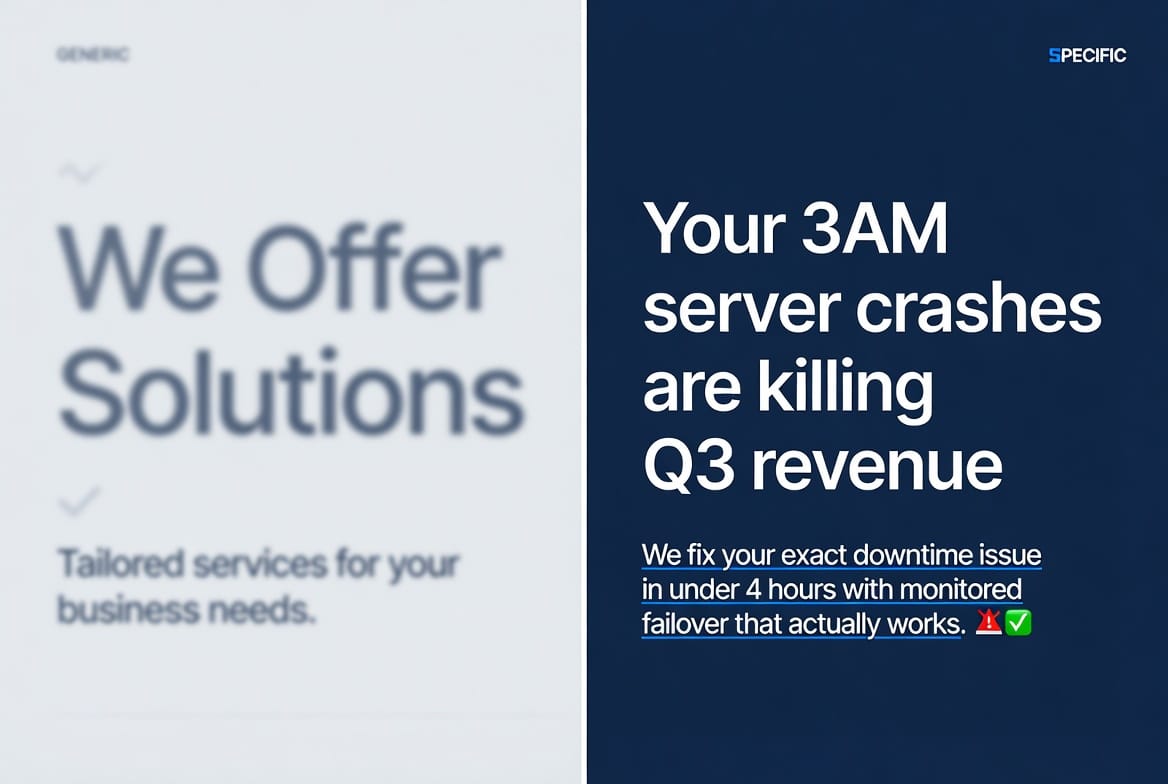
The fix is specificity at every level. A specific person in the headline. A specific problem in the subheadline. Specific outcomes in the bullet points. Specific evidence in the testimonials.
"I help coaches build their businesses" is vague.
"I help health coaches who are stuck at under $3,000 a month build a front-end funnel that generates consistent buyers from paid traffic so they can stop relying on organic content and referrals to pay their bills" is specific.
The second version loses people who aren't health coaches stuck under $3,000. That's correct. It speaks precisely to the people who are.
Reason 3: The Price Is Misaligned With the Trust Level
A coaching offer priced at $3,000 presented to cold traffic who has never heard of you will almost never sell at a meaningful conversion rate.
Not because $3,000 is too much for what you're offering. Because the trust required to justify a $3,000 purchase from a stranger doesn't exist at the moment of first contact.
Trust is built through prior transactions, social proof, demonstrated results, and time. Cold traffic has none of those. The most common manifestation of this problem is a coach who has a great offer at a fair price but is presenting it to people who have no prior relationship with them.
The fix has two versions.
The first is to create a prior transaction before the main offer ask. A low-ticket product that gives the right person a low-risk first yes, demonstrates your value in a direct and tangible way, and establishes you as someone worth trusting with a larger investment.
The second is to warm the audience more before making the high-ticket ask. More content touchpoints, a webinar, a challenge, or any other mechanism that builds familiarity and demonstrated value before the offer is presented.
The offer isn't too expensive. It's being presented too early in the relationship.
Reason 4: The Outcome Isn't Visible From the Outside
People don't buy coaching. They buy the version of themselves on the other side of the coaching.
If a prospect can't clearly see what their situation looks like after working with you, they can't evaluate whether the transformation is worth the investment. And if they can't evaluate it, they default to not buying.
The diagnostic question is: can a prospect read your offer page and see, with specificity, exactly where they are now and exactly where they'll be after completing the engagement?
Not approximately. Not in vague terms like "more confident" or "better systems." Specifically. What metric will have changed? What problem will they no longer have? What will they be able to do that they can't do now?
The fix is to rewrite the outcomes section of your offer with the specificity of a client testimonial rather than the language of a marketing promise. The testimonials of your best clients, their specific results in their own words, are the most useful raw material for this.
If you don't have client results specific enough to draw on yet, that's valuable diagnostic information. The offer might be right but not yet proven. The path forward is getting a few clients through the program at a lower price in exchange for detailed case study documentation, then using those case studies to make the transformation visible for the next wave of potential clients.
Reason 5: The Objections Aren't Being Addressed
Every prospect who reads your offer and doesn't buy has a specific reason they didn't.
Some of those reasons are circumstantial. They're not ready yet. They don't have the budget right now. They're in a life situation that makes a coaching commitment impractical.
But many of those reasons are objections that could have been addressed in the offer itself and weren't.
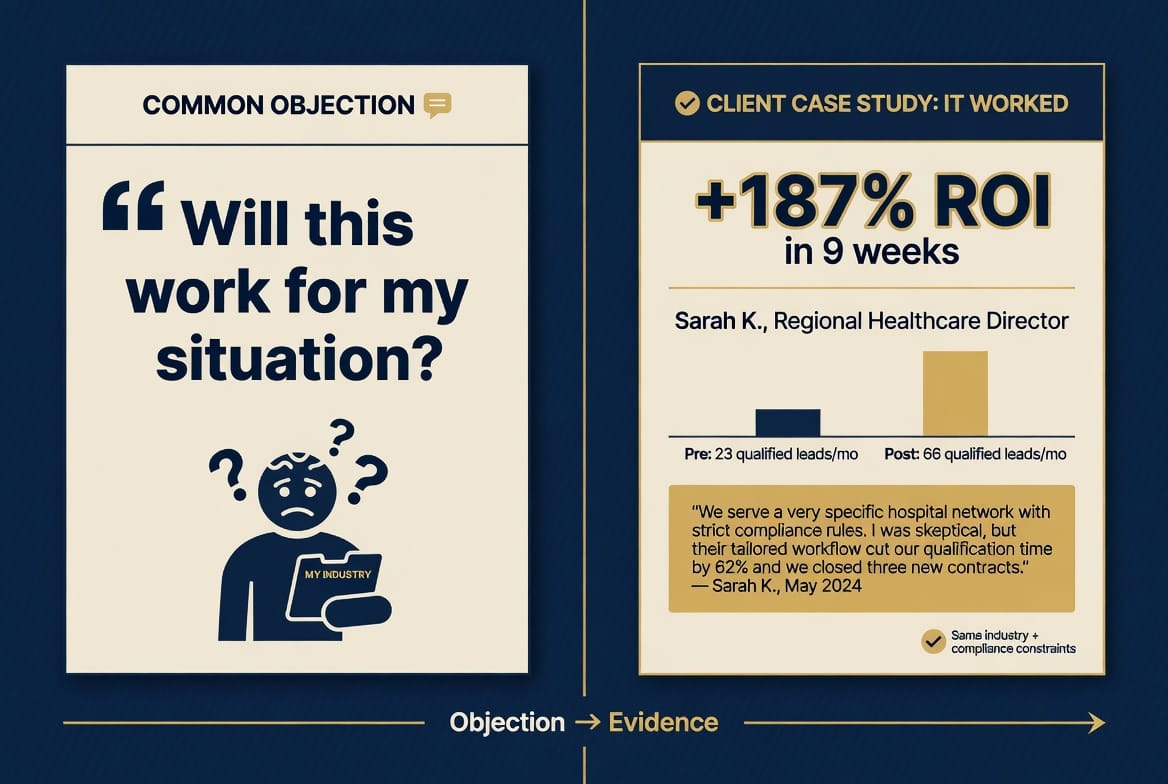
The most common unaddressed objections for coaching offers are: will this work for my specific situation? Is this the right time? Can I trust that you can deliver? Is this worth the price relative to what I've already tried?
The diagnostic question is: what are the three things that stop your ideal client from buying when they're ready to buy?
If you're not sure, ask people who didn't buy. Not in a pushy follow-up, but in a genuine curiosity conversation. The answers will tell you exactly what needs to be addressed in the offer.
The fix is to address those specific objections directly in the offer copy, the FAQ, the case studies, or the sales conversation. Not defensively. As evidence that you understand their situation and have thought about the same things they're thinking about.
Reason 6: The Delivery Method Doesn't Match the Promise
Sometimes a coaching offer isn't selling not because of the marketing but because the delivery method creates friction between the promise and the experience.
A high-ticket offer that promises transformation delivered through a format that feels low-effort creates cognitive dissonance. The prospect senses a mismatch even if they can't articulate it.
Common examples: a $2,000 program delivered entirely through pre-recorded videos with no live interaction. A $3,000 coaching offer with no clear structure for how the coaching actually works. A premium program that uses a platform or interface that feels cheap or confusing.
The diagnostic question is: does the delivery method match the promise and the price?
The fix isn't necessarily to add live components to everything or to rebuild on a new platform. It's to make sure that how you deliver the coaching matches what the buyer expects when they see the price.
Sometimes the fix is adding a live element. Sometimes it's simply describing the delivery more clearly in the offer so the prospect knows exactly what they're getting and why the format serves the outcome.
Reason 7: There's No Mechanism for Recovering the Cost of Getting Buyers There
This is the structural problem that most coaches don't identify because it's invisible from inside the business.
If your offer isn't selling through paid traffic, the most likely explanation isn't the offer itself. It's that there's no front-end mechanism covering the cost of the traffic that's bringing people to the offer.
When you send cold paid traffic directly to a $2,000 coaching offer, you're paying to acquire prospects who almost never convert. The cost per client from cold traffic to a high-ticket offer is often $500 to $2,000 or more. For many coaches, that's a meaningful percentage of the client's value.
The fix is the same fix described throughout this series. A low-ticket front-end product that covers the cost of the traffic, builds a buyer list, and warms buyers toward the high-ticket offer over time through a structured post-purchase sequence.
The coaching offer probably isn't the problem. The system delivering buyers to it is.
Priya Sharma's coaching offer sat at $197 for months selling nine copies in a launch. The same offer, repositioned as the back end of a micro offer funnel, generated 61 sales in its next launch and continued generating sales every month after that without a launch.
The offer was fine. The delivery mechanism was wrong.
The Diagnostic Process
If your coaching offer isn't selling, the most valuable thing you can do before changing anything is to identify which of these seven reasons is the actual problem.
Most offers have one primary issue and one secondary issue. Fixing the primary issue usually produces immediate, measurable improvement. Fixing the wrong issue produces effort without results.
The diagnostic process starts with data. How much traffic is the offer getting? What's the conversion rate at each stage? Where are people dropping off? At what point in the funnel is the gap between what should be happening and what is happening?
If traffic is the problem, the fix is acquisition.
If traffic is adequate but conversion is low, the fix is in the offer, the page, the price, or the alignment between who's arriving and who the offer is for.
If conversion to the initial offer is good but the high-ticket back end isn't converting, the fix is in the Bridge sequence and the post-purchase relationship.
Fix one thing at a time. Measure the result. Move to the next.
The complete framework for building the acquisition system that delivers the right buyers to your coaching offer at a cost the math can support is exactly what Get Paid to Get Leads covers.